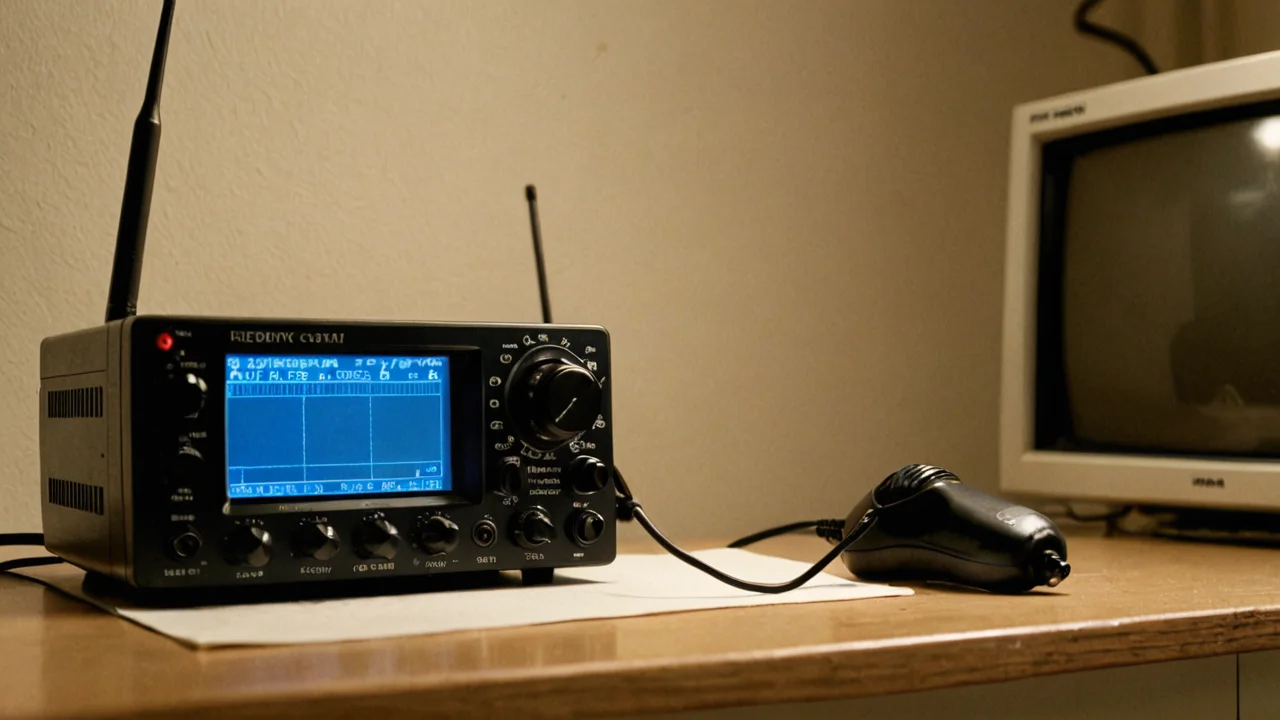
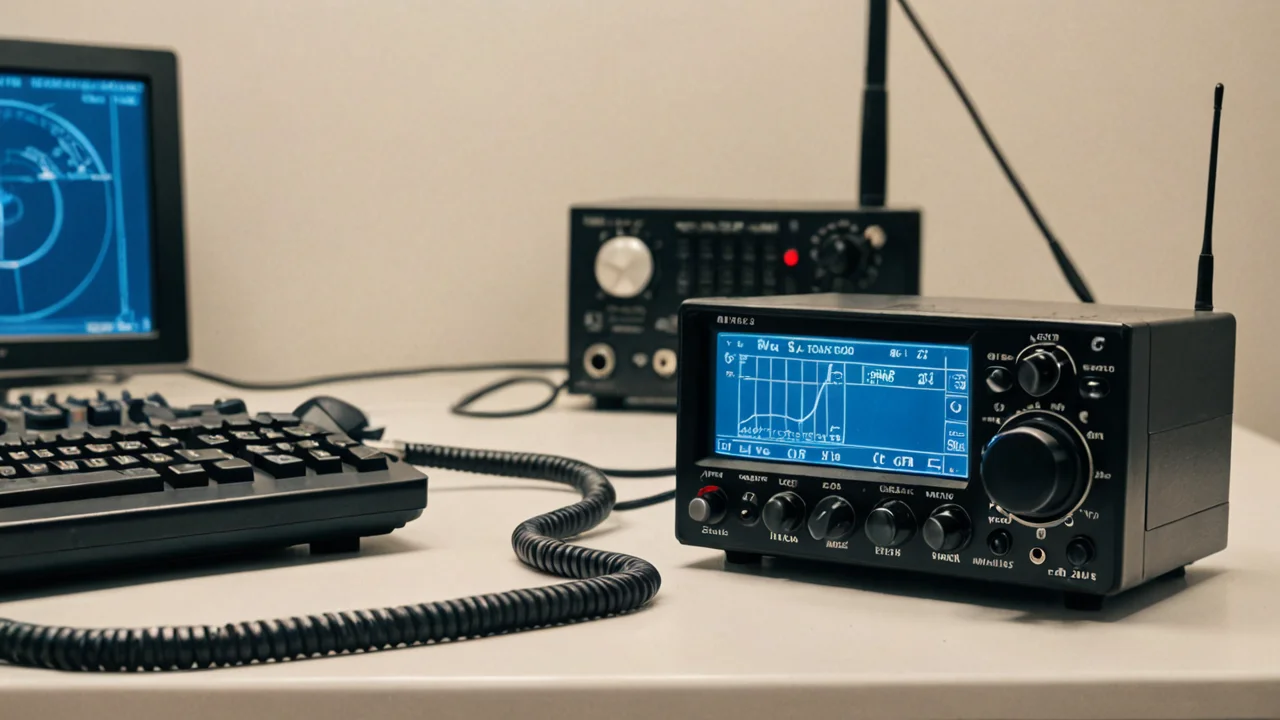
Getting started in amateur radio means earning one of three US licenses — Technician, General, or Amateur Extra — in that order, each a harder multiple-choice exam, and then building a station around the privileges that license actually grants you. The Technician exam is the entry point and carries full VHF/UHF privileges plus a narrow slice of HF; General opens most of the HF bands where long-distance work happens; Amateur Extra opens the rest. You can hold all three, and most people who stay in the hobby eventually do. What follows is how the pieces fit together, what each decision costs you in money and time, and where people commonly get stuck.
What the license actually is, and why the three classes exist
The Amateur Radio Service is defined in US federal regulations as a radiocommunication service for self-training, intercommunication, and technical investigations, carried out by authorized people with a personal aim and without pecuniary interest. That last phrase is the one that shapes everything else: you cannot use an amateur license to run a business, sell airtime, or broadcast. It is a hobby license with a technical purpose baked into its legal definition, and the exam questions reflect that — they test operating rules and safety as hard as they test electronics.
The three US license classes are cumulative, not alternatives. Each exam is a pool of multiple-choice questions drawn at random, and each is passable with a few weeks of evening study if you are starting from nothing. The classes exist because the privileges differ sharply, and the FCC gates the more capable operating modes behind the harder tests. You do not need to understand the electronics deeply to pass the entry exam; you need to memorize a body of rules, some basic theory, and a set of safety practices.
The thing newcomers misjudge: the license is not the hard part of getting started. Study materials are free and abundant, the exams are inexpensive, and the pass rate is high. The harder decisions come after — what radio to buy, what antenna you can physically put up, and whether the band privileges you hold actually match the operating you want to do. People who quit usually quit at that second stage, not at the exam.
Technician, General, Extra: what each one unlocks and what it costs you
Technician is the entry license and it is genuinely useful on its own — it carries full privileges on the VHF and UHF bands, which is where local repeater traffic, handheld operation, and most emergency communication happens. What it does not give you is broad HF access. Technicians get a narrow slice of the HF bands, and on certain HF segments their maximum transmitter power is limited to 200 W peak envelope power (PEP) when the control operator is Novice or Technician class. That is a real ceiling, not a formality: it constrains you on exactly the bands where weak-signal, long-distance work lives.
General is the license most people should aim for if they have any interest in HF at all. It opens the majority of the HF bands at the full power limit, and HF is where amateur radio does the thing outsiders picture — talking across states, across oceans, with modest equipment and a wire in a tree. The step from Technician to General is the single highest-value upgrade in the hobby, and it is one more exam of the same format.
Amateur Extra opens the remaining band segments, which matter most to contesters and to people chasing rare locations on the edges of the bands. It is the hardest of the three exams and the least urgent for a beginner. Plenty of operators run General for years and never feel limited.
| License | What it mainly buys you | Main constraint |
|---|---|---|
| Technician | Full VHF/UHF privileges, local and repeater work, handhelds | Narrow HF access; 200 W PEP on certain HF segments for Novice/Technician control operators |
| General | Most HF bands at full power | Some band segments reserved for Extra |
| Amateur Extra | All amateur privileges | Hardest exam; slowest to reach |
The honest trade-off: studying for all three at once is possible and some people do it, but it front-loads months of theory before you have ever made a contact. The better sequence for most people is Technician, get on the air on VHF, then General once you know what kind of operating you actually enjoy. You learn faster with a radio in front of you than with a question pool.
The power limits you are operating under, and why PEP is the number that matters
US amateur stations have a general maximum transmitter power of 1.5 kW peak envelope power (PEP) across most bands. That is the ceiling, not a target, and most beginners operate far below it. The limits are expressed in PEP because it is the measurement the rules use: the average power supplied to the antenna transmission line during one RF cycle at the crest of the modulation envelope. In plain terms, it is a measure of the most power the transmitter pushes at the peak of its signal, not an average you can read off a dial and assume.
There are specific lower ceilings that catch people out. Novice and Technician control operators are held to 200 W PEP on certain HF segments. Stations using spread spectrum emission types are limited to 10 W PEP. In the 76–81 GHz band, the limit is 316 W equivalent isotropically radiated power (EIRP) — a different measurement entirely, because EIRP combines transmitter output with antenna gain and represents the power an isotropic antenna would have to radiate to produce the same signal strength in the strongest direction. Antenna gain is not free power; it is power concentrated in a direction, and EIRP is how the rules account for that concentration.
Why this matters before you buy anything: a beginner who reads "1.5 kW" and assumes more power is the path to better results will spend money in the wrong place. Antenna height and quality change your results far more than doubling power does, and the legal ceiling is rarely the practical limit. The cost of chasing power is an amplifier, a bigger power supply, and often a worse antenna because the budget went to the wrong box.
Choosing a first radio: handheld, mobile, or base
Buy a handheld VHF/UHF transceiver first, not an HF rig. A handheld gets you on local repeaters immediately with your Technician license, costs a fraction of an HF station, and teaches you operating etiquette, repeater behavior, and how propagation actually feels before you commit serious money. The common failure mode is buying a large HF transceiver as a first radio, discovering the antenna situation at home is difficult, and leaving the box in a closet.
Handhelds divide into two rough camps. Cheap dual-band units get you on the air for very little and are fine for repeater work, but their receivers overload in strong RF environments and their front ends are not built for weak-signal work. Better handhelds cost more and hold up better near transmitters and on crowded bands. For a first radio, the cheap one is usually the right call — you are buying access and experience, not performance.
The next step up is a mobile or base VHF/UHF rig with more power and a proper external antenna. The antenna matters more than the radio here. A handheld with an external antenna at height will outperform a more expensive radio with a rubber duck almost every time. When you do move to HF, the same rule holds harder: a modest HF transceiver feeding a well-placed wire antenna will beat an expensive rig feeding a compromise antenna, and it is not close.
The trade-off nobody warns you about is the antenna problem. HF antennas are physically large — a half-wave dipole for the lower HF bands is tens of feet long — and if you live in an apartment or under deed restrictions, your realistic options shrink fast. Solve the antenna question before you buy an HF radio. People who buy first and solve the antenna second are the ones who end up frustrated.
Antennas, bands, and what your location actually permits
Put up the highest, longest wire you can and accept the compromise. That is the whole antenna decision for a beginner, and everything else is detail. Height and length drive your signal more than any other variable you control, and the constraints are almost always physical rather than technical — lot size, trees, roofline, neighbors, and any deed restrictions that prohibit outdoor antennas.
Current US amateur allocations span 1800 kHz to 250 GHz, from the low HF bands up into the microwave region. In practice a beginner lives on VHF/UHF for local work and on a handful of HF bands for distance. The lower HF bands are harder to antenna well because the wavelengths are long; the higher HF bands are easier to fit but less reliable at night and during low sunspot activity. Which bands you can use well is determined by what you can physically erect, not by what the radio can tune.
If you cannot put anything outside, indoor and attic antennas work but at a real cost in efficiency — you lose signal in both directions and pick up more local noise. That is a genuine limitation, not a moral failing, and it changes your strategy: you will lean more on digital modes and on the bands that tolerate compromise antennas. If you can put up an outdoor wire, do it before you upgrade anything else.
The mistake that costs the most money: buying an antenna tuner to make a bad antenna work instead of fixing the antenna. A tuner makes a transmitter happy with a mismatched load; it does not make the antenna radiate better. It has its place, but it is not a substitute for wire in the air.
Cost, time, and the order to do things in
Do it in this order: study for and pass Technician, buy a cheap handheld, get on local repeaters, then decide whether HF interests you before spending more. This sequence keeps your early spending small and your learning real, and it means every later purchase is informed by operating you have actually done rather than by reviews you have read.
On time: the entry exam is a few weeks of evening study for most people starting cold, and the next exam is comparable. The study materials are largely free, and the question pools are public, which means you can see exactly what you will be tested on. There is no reason to pay much for exam preparation, and no reason to stretch it over months.
On money, the honest shape of it: a cheap handheld is the smallest meaningful outlay; a mobile or base VHF/UHF setup with a proper antenna costs more; an HF station — transceiver, power supply, antenna, feedline, and possibly a tuner — is the largest single step, and antenna work can rival the radio itself in cost depending on your situation. The legal power ceiling of 1.5 kW PEP is available to you, but almost nothing about getting started requires approaching it, and the money spent chasing power is usually better spent on height and wire.
What you are buying at each stage is different. The first purchase buys access and experience. The second buys reach. The third buys the bands. Skipping ahead — buying the HF station before you have operated, or the amplifier before you have a good antenna — is how beginners spend the most money for the least result. The people who get the most out of the hobby are rarely the ones with the most expensive stations; they are the ones who got on the air early, made contacts, and let their operating tell them what to buy next.
One last thing worth knowing before you start: the hobby rewards patience with propagation and antenna experimentation more than it rewards equipment. The bands change with time of day and solar conditions, a wire moved ten feet higher can transform your results, and the operators who enjoy it longest are the ones who treat the station as something to keep improving rather than something to buy once. Start small, get licensed, get on the air, and let the next purchase be an answer to a question you actually have.